

Mortgage life insurance in the UK is a type of term life cover that pays a lump sum if you die during the policy. With a decreasing term policy, the amount of cover falls in line with a repayment mortgage.
Your family can use the money to clear the mortgage and keep the home. You pay a monthly premium for a set number of years. If you outlive the policy, it simply ends and nothing is paid.
You may also see it called mortgage protection insurance or mortgage cover. The labels cause confusion. This guide sets out what each type does, who receives the payout and what happens when your mortgage changes.
What is mortgage life insurance?
Mortgage life insurance is life cover bought to pay off a mortgage if you die.
The standard version is a decreasing term policy. The sum assured, which is the amount the policy pays on death, goes down over time as your mortgage balance falls.
You choose the amount of cover, the length of the policy and whether it covers one person or two.
If you have a repayment mortgage, you can match the amount and term to it when you apply for a mortgage. Our guide to mortgage life insurance covers the product in more detail.
It is a separate contract with an insurer and not part of your mortgage agreement.
It also differs from mortgage payment protection insurance (MPPI). MPPI pays your monthly mortgage payments for a limited time if you cannot work because of accident, sickness or sometimes unemployment.
Mortgage life insurance pays out when you die.
How does mortgage life insurance work?
The policy follows a simple pattern:
- You choose the cover amount, the policy term and whether to insure one life or two.
- You pay a monthly premium for the whole term.
- If you die during the term, the insurer pays a lump sum.
- Your family uses the money, usually to repay the lender.
- The policy then ends. If you outlive the term, it also ends, with no cash value.
Life insurance to pay off your mortgage comes in two main forms.
Decreasing mortgage life insurance
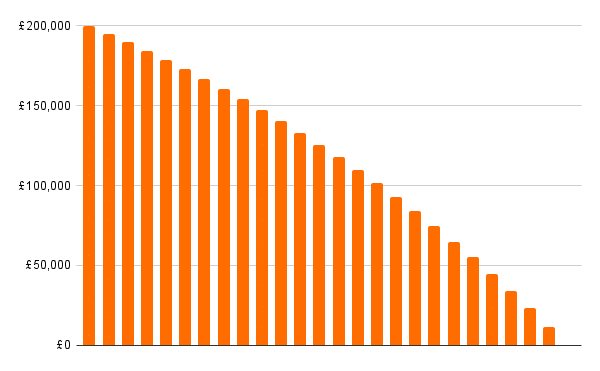
Cover initially matches your mortgage amount and falls each year, roughly in line with a repayment mortgage. Because the payout shrinks over time, it costs less than level cover. It suits a mortgage where the debt goes down as you make payments.
Level mortgage life insurance
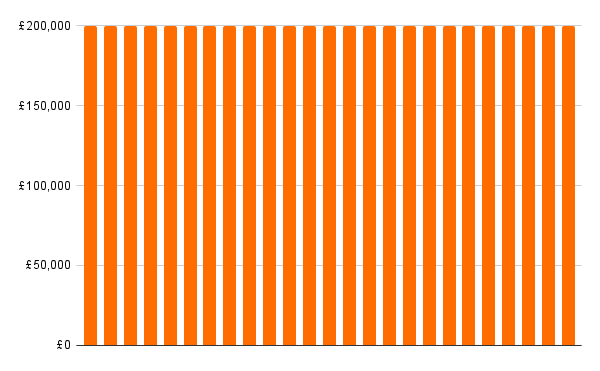
Cover stays the same for the whole term. That suits an interest only mortgage, where the debt does not fall, or anyone who wants to leave extra money for their family. On a repayment mortgage, level cover can be used and it leaves spare cash after the lender is repaid and costs a bit more.
A worked example
Say you have a £500,000 repayment mortgage over 25 years. A decreasing policy starts at £500,000 and falls to nil by the end of the term. If you died in year 20, when you might still owe around £150,000, it would pay roughly what is left.
A level policy would pay the full £500,000 whenever you died during the 25 years. Your family would clear the mortgage and keep the rest.
On a £600,000 interest-only mortgage, you still owe £600,000 at the end of the term. Decreasing cover would fall away while the debt stayed put. You need level cover or another plan instead.
How long does the policy last?
You pick the number of years when you apply, much like a mortgage.
A 25 year policy costs more than a 15 year policy for the same cover, because there is more time in which a claim could happen. Choose a term that matches your mortgage and the cover lasts as long as the debt.
What does mortgage life insurance cover?
The policy covers death during the policy term. If you die before it ends, the insurer pays a lump sum and the policy stops.
Many policies also include terminal illness benefit. It lets you claim early if a doctor says you have less than 12 months to live, according to MoneyHelper. The policy then pays out and ends.
Mortgage life insurance does not pay out when:
- you are ill or injured but still alive, unless you have added critical illness cover
- you die after the policy has ended
- you have stopped paying premiums and the cover has lapsed
- the insurer finds you gave wrong answers when you applied
An illness or injury that stops you working needs a different product, such as MPPI or income protection.
Get insurance advice
Let Unbiased match you with an independent life insurance expert. Getting started is easy, fast and free.
Who gets the money from mortgage life insurance?
It depends on whether the policy covers one person or two, and whether it is written in trust.
Single policy: The payout goes to your estate, unless you write the policy in trust or name a beneficiary.
Joint policy: The payout goes to the surviving policyholder after the first death. The policy then ends.
The insurer does not pay your lender directly. Your family decides how to spend the money. They can repay the mortgage in full or in part, keep up the monthly payments or use it for something else.
We explain whether life insurance has to pay off debt in a separate article.
Why writing the policy in trust matters
A payout that lands in your estate can count towards Inheritance Tax. The standard threshold is £325,000 until 5 April 2031, according to HMRC. GOV.UK states that the standard rate is 40% on the part of an estate above the threshold, and you can read how Inheritance Tax works on its site.
For example, say your estate already sits above the threshold and a £250,000 payout lands in it. Tax at 40% on that sum would be £100,000, before any reliefs that might apply.
Writing the policy in trust can keep the payout outside your estate. A trust can also set out how and when the money is paid. Ask your adviser or insurer about trusts when you apply, and take advice if your family situation is complex.
Will mortgage life insurance pay out?
In 2025, insurers paid 97.9% of individual protection claims, according to the Association of British Insurers (ABI).
The ABI also reports that insurers paid £7.84 billion in individual and group protection claims in 2025. It counted 258,000 new individual claims paid. These figures cover all types of protection cover, not only mortgage life insurance.
Two things can stop a policy paying out: wrong answers on the application and missed premiums.
You have a legal duty to take reasonable care not to misrepresent anything to the insurer, under the Consumer Insurance (Disclosure and Representations) Act 2012. In practice, that means answering every question about your health, smoking or vaping, job and lifestyle fully and honestly.
If you stop paying premiums, the cover ends and you do not get the money back. Keep the policy running until you no longer need it.
What is the difference between life insurance and mortgage life insurance?
Mortgage life insurance is a type of life insurance. The main difference is how the payout changes over time.
| Feature | Mortgage life insurance (decreasing) | Standard life insurance (level) |
|---|---|---|
| Payout over the term | Falls as your mortgage balance falls | Stays the same |
| Usual cost | Lower | Higher |
| Best suited to | A repayment mortgage | Family costs, interest-only mortgages or both |
| Money left after the mortgage | None | Yes, if the payout is bigger than the debt |
| Pays out on | Death | Death |
| Cash value | None | None |
You can hold both. Decreasing cover protects the mortgage, and a level policy protects family living costs. Our guide to life cover explains the other options.
How much does mortgage life insurance cost?
The price depends on you and the cover you choose.
Insurers look at:
- your age
- your health and medical history
- whether you smoke or vape
- your job
- the amount of cover
- the length of the policy
- whether the cover is decreasing or level
Younger, healthier people usually pay less. With guaranteed premiums, the price you start on stays the same for the whole term. Reviewable premiums can start lower, but the insurer can raise them later. That is more common when you add critical illness cover.
Quotes change, and your own age and health affect each one. Ask for a live figure before you plan around any price.
A few steps can keep the cost down:
- Compare quotes from the whole market.
- Choose decreasing cover if you have a repayment mortgage.
- Cover only what you need and match the term to your mortgage.
- Ask for a fresh quote if you have given up smoking, as the price can fall once you have been nicotine-free for long enough.
Should you take a joint policy or two single policies?
A joint policy covers both partners for one premium. It pays out once, on the first death, and then ends. The surviving partner is left with no cover. A joint policy can be cheaper than two single ones, according to Legal & General.
Two single policies can cost more, but each person keeps cover after the other dies. They can also be simpler to manage if a couple separates.
The cheaper option is not always the better one.
MoneySavingExpert says advisory brokers tend to recommend two single policies, because each partner gets their own payout and there is less of an issue if the couple split up. Any saving on a joint policy comes with a catch: the survivor may have to buy new cover later, at an older age and with whatever health they have by then. Ask for quotes on both.
Do you need life insurance to get a mortgage?
No. Life insurance is not a legal requirement for a mortgage.
Lenders often offer it when you apply, but you can say no or buy elsewhere. The FCA’s rules say that if a lender asks you to hold an insurance policy linked to your mortgage, it must accept an equivalent policy from a different provider. You can read the rule in the FCA Handbook. You can weigh up both sides in our article on whether you need life insurance to get a mortgage.
You may need less cover, or none, if nobody depends on your income. Death in service cover from an employer can also help, but you lose it when you leave the job.
Do you need a mortgage to get mortgage life insurance?
No. The policy is not directly linked to your mortgage. You can buy it whether or not your mortgage has started. If you only want to protect your family, you can choose family life insurance instead. That can be level, decreasing or whole of life.
Can you add critical illness cover?
With most companies, yes.
Critical illness cover pays a lump sum if you are diagnosed with a serious illness listed in the policy, such as cancer, a heart attack or a stroke. The money goes to you while you are alive. You could use it to pay off the mortgage or cover your costs while you recover.
Premiums will be higher than for basic life cover. Check the wording to see what a claim does to your cover. On some policies with both covers, a critical illness claim ends the policy, and a death claim ends it too.
That matters on a joint policy, because the partner who has not claimed would lose their cover. A policy each avoids this.

What happens to mortgage life insurance when your mortgage is paid off or changes?
Your mortgage and your life policy are separate contracts with their own end dates. A common slip is leaving the policy unchanged after a remortgage or moving home, when the mortgage term can alter.
If your mortgage term changes
Say you have 18 years left on your policy but take a new 22 year mortgage. The cover would end four years before the debt does. Ask your adviser about extending cover or adding a second policy to fill the gap.
Do not cancel the old policy until the new one is in place.
If your mortgage is paid off
If your mortgage is fully repaid but the policy has time left, you have two choices:
- Cancel the policy, as the debt is gone. You will not get any premiums back.
- Keep it, because it still pays out if you die and gives your family extra security.
If the premiums feel too high, ask your insurer whether you can reduce the cover. For the full picture, read what happens to life insurance when the mortgage is paid off.
What happens to your mortgage if you die without life insurance?
The mortgage debt does not disappear.
A joint borrower stays responsible for the payments. If there is no joint borrower, the lender can look to your estate, which may mean your family has to sell the home.
Read more in our article on what happens to a mortgage if you die without life insurance.
How do you apply for mortgage life insurance?
Take these steps:
- Work out how much cover you need. Start with your mortgage balance, then add any other debts.
- Choose decreasing or level cover, and a single or joint policy.
- Pick a term that matches your mortgage, and ask for guaranteed premiums.
- Compare quotes from across the market, or ask an adviser to search for you.
- Answer every health and lifestyle question in full.
- Ask about writing the policy in trust.
- Review the policy each time you remortgage or move.
Start early, ideally before your mortgage completes, because set-up time depends on the cover you ask for and your medical history. Our guide to the different mortgage repayment methods can help you match the right cover to your loan.
Next steps
Mortgage life insurance matches your cover to your mortgage. It helps to sort out the mortgage first.
If you are buying, remortgaging or moving, contact a mortgage broker and we will introduce you to an independent, whole-of-market mortgage broker. You can then ask about protection at the same time.
Get expert advice
Let Unbiased match you with an independent life insurance expert. Getting started is easy, fast and free.
Frequently Asked Questions
Not at all. The law does not require life insurance for a mortgage, and you can choose your own provider. If a lender asks for insurance linked to your mortgage, FCA rules say it must accept equivalent cover from another provider. Compare quotes before you accept the lender’s own offer.
The name mortgage protection covers two different products. Mortgage life insurance pays out if you die. Mortgage payment protection insurance (MPPI) pays your monthly payments for a limited time if you cannot work because of accident, sickness or sometimes unemployment. Check which one a quote describes before you buy.
No. Your family or your trustees receive the money, not the lender. They then decide whether to clear the mortgage, keep making monthly payments or use the money another way. The policy is not directly linked to your mortgage, and the insurer does not pay the lender for you.
Yes, but you will not get any money back. Cancelling usually makes sense only when your mortgage is repaid and nobody relies on the cover. Never cancel an old policy until a new one is in place, or you could be left without any protection.
Level cover, normally. Your debt stays the same on an interest-only mortgage, and decreasing cover would drop below what you owe. Level cover pays the same sum throughout the term. You also need a separate plan to repay the loan at the end.
Not necessarily. Your policy carries on until the term ends, whatever happens to your mortgage. Check that the cover and term still match your new mortgage amount and length. If they do not, ask an adviser about topping up or replacing the policy. Do not cancel the old one first.